







All Atoms and bonds articles – Page 2
-
 Resource
Atomic structure | Knowledge check | 14–16
Assess learning on atomic structure with a higher and foundation worksheet
-
 Resource
Adeiledd atomig | Gwirio gwybodaeth | 14–16
Aseswch y gwaith dysgu am adeiledd atomig gyda thaflenni gwaith sylfaen ac uwch
-
 Resource
Covalent structure and bonding | Knowledge check | 14–16
Assess learning on covalent structure and bonding with two levels of worksheet
-
 Resource
Covalent structure and bonding in our bodies | In context | 14–16
Put covalent bonding into context with questions about the human body, its composition and the nutrition needed to support human health
-
 CPD article
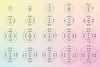
How to teach atomic structure at 14–16
Strengthen your students’ grasp of the atom and electronic configurations with these models and strategies
-
 Resource
Covalent bonding | Developing understanding | 14–16 years
Develop learners’ understanding of the size and shape of covalent structures by interpreting a range of diagrams and models
-
 Resource
Ionic bonding | Developing understanding | 14–16 years
Develop learners’ understanding of ionic lattices through comparing 2D and 3D representations
-
 Resource
Metallic bonding | Developing understanding | 14–16 years
Develop learners’ sub-microscopic understanding by interpreting a range of models used to represent metallic structure and metal ions
-
 Resource
Adeiledd Carbon Datblygu dealltwriaeth | 14–16 oed
Anogwch y dysgwyr i feddwl am sut mae atomau ac ionau’n cael eu cynrychioli a beth mae hyn yn ei olygu ar y lefel is-ficrosgopig
-
 Resource
Carbon allotropes | Developing understanding | 14–16 years
Encourage learners to think about how different structures of carbon are represented and what this means at the sub-microscopic level
-
 News
NewsHelp learners understand and compare the Bohr and electron cloud models
Make the abstract nature of atomic theory more concrete with these evidence-informed teaching tips
-
 Resource
Different allotropes of carbon | Johnstone’s triangle worksheets | 14–16 years
Use these worksheets to get learners thinking about carbon allotropes at different levels, from sub-microscopic structures to macroscopic properties
-
 Resource
Covalent bonding in water | Johnstone’s triangle worksheets | 14–16 years
Use these worksheets to develop learners’ understanding of covalent bonding, including symbolic models and how macroscopic properties relate to the type of bonding
-
 Resource
Metallic bonding in copper | Johnstone’s triangle worksheets | 14–16 years
Use these worksheets to develop learners’ understanding of metallic bonding, including symbols and diagrams and how macroscopic properties relate to the type of bonding
-
 Resource
Ionic bonding in table salt | Johnstone’s triangle worksheets | 14–16 years
Use these worksheets to develop learners’ understanding of ionic structures and bonding, including symbols and diagrams and how macroscopic properties are related to bonding
-
 News
NewsNew method grows larger diamonds
Use this real-world context when teaching about giant covalent structures
-
 Resource
Representing elements and compounds | Review my learning worksheets | 14–16 years
Identify learning gaps and misconceptions with this set of worksheets offering three levels of support
-
 Resource
Atomau ac ïonau | Stribed strwythur | 14–16 oed
Cefnogwch y dysgwyr i gofio ac ysgrifennu am ffurfiant ïonau a’r ffactorau sy’n effeithio arno
-
 Resource
Atoms and ions | Structure strip | 14–16 years
Support learners to recall and write about ion formation and factors that affect it
-
 Resource
Structure of the atom | Structure strip | 14–16 years
Support learners to recall and write about the properties of subatomic particles and the structure of an atom