






All articles by Neil Goalby
-
 Ideas
IdeasUse global conflict to teach the Haber process
How to link the Strait of Hormuz to ammonia production and sustainability in your lessons
-
 Resource
Reacting ratios: gas volumes | Developing understanding | 14–16 years
Connect learners’ ideas about balanced equations, the ratio of atoms and moles and the volume of reactants and products
-
 Resource
Symbols and formulas | Developing understanding | 11–14 years
Develop your learners’ understanding of what is represented by symbols and chemical formulas
-
 Ideas
IdeasGive science lessons a real-life context
Keep your learner’s curiosity burning by relating your topic to current issues and everyday life with these five approaches
-
 Resource
Limiting and excess reactants: quantitative | Developing understanding | 14–16 years
Develop learners quantitative understanding of limiting and excess reactants with the support of bar diagrams
-
 Resource
Limiting and excess reactants (qualitative) | Developing understanding | 14–16 years
Introduce limiting and excess reactants using an analogy of ice cream and ice cream cones
-
 Resource
Concentration and moles | Developing understanding | 14–16 years
Support learners to develop secure mental models of how concentration is measured and calculated in mol/dm3
-
 Resource
Word equations | Developing understanding | 11–14 years
Use this worksheet to improve your learners’ understanding of writing and interpreting word equations
-
 Resource
Yield | Developing understanding | 14–16 years
Part of the Johnstone’s triangle series, this resource includes teacher notes and a student worksheet to help learners understand the difference between actual and theoretical yield
-
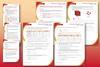 Resource
Interpreting chemical equations for ionic compounds | Developing understanding | 14–16
Help your learners develop mental models of what is represented in balanced chemical equation for ionic compounds with this resource, including teacher notes and a student worksheet
-
 Resource
Moles and volume | Developing understanding | 14–16 years
Deepen your learners’ understanding of the idea that equal volumes of gases contain an equal number of molecules with this worksheet
-
 Resource
Moles and mass | Developing understanding | 14–16 years
Develop understanding of the relationship between the mass of one mole, the number of moles and the mass of a substance
-
 Resource
Molau a màs | Datblygu dealltwriaeth | 14–16 oed
Datblygu dealltwriaeth o’r berthynas rhwng màs un môl, nifer y molau a màs sylwedd
-
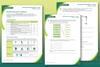 Resource
Reactant and product substances | Developing understanding | 11–14
Use these worksheets to secure and deepen your learners’ understanding of reactants and products in chemical changes
-
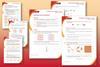 Resource
Interpreting chemical equations | Developing understanding | 14–16 years
Deepen learners’ understanding of interpreting chemical equations by exploring the topic at different conceptual levels
-
 Resource
Dehongli hafaliadau cemegol | Datblygu dealltwriaeth | 14–16 oed
Dyfnhau dealltwriaeth dysgwyr o ddehongli hafaliadau cemegol drwy archwilio’r pwnc ar wahanol lefelau cysyniadol
-
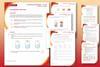 Resource
Concentration and mass | Developing understanding | 14–16 years
Encourage learners to deepen their understanding of concentration and mass from the macroscopic to sub-microscopic level
-
 Resource
Reacting ratios: masses | Developing understanding | 14–16 years
Develop learners’ understanding of the ratio of the very large number of atoms or molecules in balanced chemical equations
-
 Resource
Cymarebau adweithio: masau | Datblygu dealltwriaeth | 14–16 oed
Datblygu dealltwriaeth dysgwyr o gymhareb y nifer mawr iawn o atomau neu foleciwlau mewn hafaliadau cemegol cytbwys
-
 Resource
Diffusion and chemical reactions | Developing understanding | 11–14 years
Use this worksheet to deepen understanding of diffusion and chemical reactions and how these processes are represented