Shop FRANKIE4
Enjoy fast, free delivery, exclusive deals, and award-winning movies & TV shows.
Buy New
-46% $11.97
FREE delivery Thursday, June 18 on orders shipped by Amazon over $35
Ships from: Amazon.com
Sold by: Amazon.com
$11.97 with 46 percent savings
List Price: $22.00
Get Fast, Free Shipping with Amazon Prime
FREE delivery Thursday, June 18 on orders shipped by Amazon over $35
Or Prime members get FREE delivery Monday, June 15. Join Prime
Arrives 6 days before Father's Day
In Stock
$$11.97 () Includes selected options. Includes initial monthly payment and selected options. Details
Price
Subtotal
$$11.97
Subtotal
Initial payment breakdown
Shipping cost, delivery date, and order total (including tax) shown at checkout.
Shipper / Seller
Amazon.com
Amazon.com
Shipper / Seller
Amazon.com
Returns
FREE 30-day refund/replacement
Quick refund
Usually issued within 24 hours. See exceptions
FREE return
At least one free return option available.
Convenient dropoff
At any of our 50,000 US locations.
See return policy
Gift options
Available at checkout
Available at checkout This item is a gift. Change
At checkout, you can add a custom message, a gift receipt for easy returns and have the item gift-wrapped
Payment
Secure transaction
Your transaction is secure
We work hard to protect your security and privacy. Our payment security system encrypts your information during transmission. We don’t share your credit card details with third-party sellers, and we don’t sell your information to others. Learn more
$7.63
May have limited writing in cover pages. Pages are unmarked. ~ ThriftBooks: Read More, Spend Less May have limited writing in cover pages. Pages are unmarked. ~ ThriftBooks: Read More, Spend Less See less
FREE delivery June 23 - 25. Details
Arrives after Father's Day. Need a gift sooner? Send an Amazon Gift Card today by email or text message.
In stock
$$11.97 () Includes selected options. Includes initial monthly payment and selected options. Details
Price
Subtotal
$$11.97
Subtotal
Initial payment breakdown
Shipping cost, delivery date, and order total (including tax) shown at checkout.
Access codes and supplements are not guaranteed with used items.
Ships from and sold by ThriftBooks-Dallas.
Added to

Sorry, there was a problem.

There was an error retrieving your Wish Lists. Please try again.

Sorry, there was a problem.

List unavailable.
Kindle app logo image

Download the free Kindle app and start reading Kindle books instantly on your smartphone, tablet, or computer - no Kindle device required.

Read instantly on your browser with Kindle for Web.

Using your mobile phone camera - scan the code below and download the Kindle app.

QR code to download the Kindle App

  • My Life as a Quant: Reflections on Physics and Finance

Follow the author

Get new release updates & improved recommendations
Something went wrong. Please try your request again later.

My Life as a Quant: Reflections on Physics and Finance

4.3 out of 5 stars (470)

{"desktop_buybox_group_1":[{"displayPrice":"$11.97","priceAmount":11.97,"currencySymbol":"$","integerValue":"11","decimalSeparator":".","fractionalValue":"97","symbolPosition":"left","hasSpace":false,"showFractionalPartIfEmpty":true,"offerListingId":"UPcwaF6ysPu%2FoUlIJ1G%2FBXBtg3xh7wJFt0upcz%2F0T2%2Bt2kTPsv77jxf6HcFVqG%2B15Y0vJXisiSdYLWBjToRLh%2BgPfdgXiwRH73a%2BuMPoGOLmBhsN7fE7EwDO%2FOcev3Qtho4UzBzMXBw%3D","locale":"en-US","buyingOptionType":"NEW","aapiBuyingOptionIndex":0}, {"displayPrice":"$7.63","priceAmount":7.63,"currencySymbol":"$","integerValue":"7","decimalSeparator":".","fractionalValue":"63","symbolPosition":"left","hasSpace":false,"showFractionalPartIfEmpty":true,"offerListingId":"UPcwaF6ysPu%2FoUlIJ1G%2FBXBtg3xh7wJFib%2BHfYm1GsTOJbE59D%2BnvqfWhpJbXEPOXyQLaCnXmYsbqT1zZz89A7PrALFvO3aqjha17LolMfevU2zrhtMKKUn9zrH%2FzJdC6%2F0B4BgWkJNBZDJjptW5JzGWkwwo5pemw%2BcNp9%2BU%2BHEgfb4Dop1D4w%3D%3D","locale":"en-US","buyingOptionType":"USED","aapiBuyingOptionIndex":1}]}

Purchase options and add-ons

In My Life as a Quant, Emanuel Derman relives his exciting journey as one of the first high-energy particle physicists to migrate to Wall Street. Page by page, Derman details his adventures in this field―analyzing the incompatible personas of traders and quants, and discussing the dissimilar nature of knowledge in physics and finance. Throughout this tale, he also reflects on the appropriate way to apply the refined methods of physics to the hurly-burly world of markets.
Sponsored

Frequently bought together

This item: My Life as a Quant: Reflections on Physics and Finance
$11.97
Get it as soon as Thursday, Jun 18
In Stock
Ships from and sold by Amazon.com.
+
$17.72
Get it as soon as Monday, Jun 22
Sold by Active Dinc and ships from Amazon Fulfillment.
+
$16.20
Get it as soon as Thursday, Jun 18
In Stock
Ships from and sold by Amazon.com.
Total price: $00
To see our price, add these items to your cart.
Details
Added to Cart
Some of these items ship sooner than the others.
Choose items to buy together.

Customers also bought or read

Loading...

Editorial Reviews

Review

"There are few "gentlemen bankers" left these days. Nor is there much room in the great financial houses for anything that smacks of the amateur spirit. That is why Emanuel Derman's memoirs are so compelling…Derman's wry humour and sense of irony are apparent throughout the book." - Financial Times

"That sense of being an intruder in outlaw territory lends an intriguing mood to Derman's My Life As a Quant, a literate and entertaining memoir." -Business Week

"engaging" --(CFO Europe, October 2005)

"Not only a delightful memoir, but one full of information, both about people and their enterprise. I never thought that I would be interested in quantitative financial analysis, but reading this book has been a fascinating education." –Jeremy Bernstein, author of Oppenheimer: Portrait of an Enigma

"This wonderful autobiography takes place in that special time when scientists discovered Wall Street and Wall Street discovered them. It is elegantly written by a gifted observer who was a pioneering member of the new profession of financial engineering, with an evident affection both for finance as a science and for the scientists who practice it. Derman’s portrait of how the academics brought their new financial science to the world of business and forever changed it and, especially, his descriptions of the late and extraordinary genius Fischer Black who became his mentor, reveal a surprising humanity where it might be least expected. Who should read this book? Anyone with a serious interest in finance and everyone who simply wants to enjoy a good read."–Stephen Ross, Franco Modigliani Professor of Finance and Economics, Sloan School, MIT

From the Inside Flap

Praise for My Life as a Quant

My Life as a Quant, by Emanuel Derman is, indeed, a perfect memoir, as Derman, a South African-born physicist turned financial engineer, is a perfect memoirist. --Grant's Interest Rate Observer

That sense of being an intruder in outlaw territory lends an intriguing mood to Derman's My Life as a Quant, a literate and entertaining memoir.--BusinessWeek

Derman's memoir of his transition from mathematical physicist to expert finance whiz at Goldman Sachs and Salomon Brothers reads like a novel, but tells a lot about brains applied to making money grow.--Paul A. Samuelson, MIT, Nobel Laureate in Economic Sciences, 1970

Elegantly written by a gifted observer who was a pioneering member of the new profession of financial engineering with an evident affection both for finance as a science and for the scientists who practice it. Derman's portrait of how the academics brought their new financial science to the world of business and his descriptions of the late and extraordinary genius Fischer Black who became his mentor, reveal a surprising humanity where it might be least expected.--Stephen Ross, Franco Modigliani Professor of Finance and Economics, Sloan School, MIT

a deep and elegant exploration by a thinker who moved from the hardest of all sciences (physics) to the softest of the soft (finance). Derman is a different class of thinker... I know of no other book that bridges the two cultures.--Nassim Taleb, author of The Black Swan and Fooled by Randomness

Product details

  • Publisher ‏ : ‎ Wiley
  • Publication date ‏ : ‎ January 11, 2016
  • Edition ‏ : ‎ 1st
  • Language ‏ : ‎ English
  • Print length ‏ : ‎ 304 pages
  • ISBN-10 ‏ : ‎ 0470192739
  • ISBN-13 ‏ : ‎ 978-0470192733
  • Item Weight ‏ : ‎ 2.31 pounds
  • Dimensions ‏ : ‎ 5.9 x 1 x 8.6 inches
  • Best Sellers Rank: #247,560 in Books (See Top 100 in Books)
  • Customer Reviews:
    4.3 out of 5 stars (470)

About the author

Follow authors to get new release updates, plus improved recommendations.
Emanuel Derman
Brief content visible, double tap to read full content.
Full content visible, double tap to read brief content.

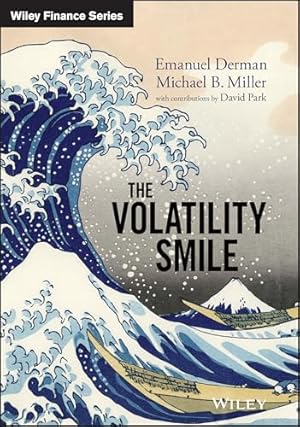
EMANUEL DERMAN is Professor of Practice Emeritus at Columbia University, where he previously directed their program in financial engineering. He is the author of My Life As A Quant, one of Business Week's top ten books of the year, in which he introduced the quant world to a wide audience, and Models.Behaving.Badly: Why Confusing Illusion with Reality Can Lead to Disasters,On Wall Street and in Life. His textbook, with Michael Miller, is The Volatility Smile.

His latest book is Brief Hours and Weeks: My Life as a Capetonian, a memoir of youth in a tightly knit, off-the-boat, first-generation Polish-Jewish community in Cape Town in the late 1940s, 50s, and 60s, bringing to life a now lost world.

He was born in South Africa but has lived most of his professional life in Manhattan in New York City, where he has made contributions to several fields. He started out as a theoretical physicist, doing research on unified theories of elementary particle interactions. At AT&T Bell Laboratories in the 1980s he developed programming languages for business modeling. From 1985 to 2002 he worked on Wall Street, running quantitative strategies research groups in fixed income, equities and risk management, and was appointed a managing director at Goldman Sachs & Co. in 1997. The financial models he developed there, the Black-Derman-Toy interest rate model and the Derman-Kani local volatility model, have become widely used industry standards.

In his 1996 article Model Risk Derman pointed out the dangers that inevitably accompany the use of models, a theme he developed in My Life as a Quant. Among his awards and honors, he was named the SunGard/IAFE Financial Engineer of the Year in 2000. He has a PhD in theoretical physics from Columbia University and is the author of numerous articles in elementary particle physics, computer science, and finance.

Sponsored

Customer reviews

4.3 out of 5 stars
470 global ratings
Sponsored

Customers say

Customers find the book interesting and entertaining, with great insights into the life of a quant. Moreover, they appreciate its informative content, with one customer highlighting its detailed explanations of complex financial subjects. Additionally, the autobiography receives positive feedback, with one customer noting it's stuffed with interesting tidbits of physics. The writing style is well-received, with one customer specifically praising the author's ability to explain particle physics.
AI Generated from the text of customer reviews

Select to learn more

58 customers mention content, 51 positive, 7 negative
Customers find the book interesting and entertaining, with great insights and satisfaction on personal levels.
This was a pretty good book. I like reading about the history of the financial industry and Dr. Derman's biography is a fun read....Read more
Great readRead more
...But overall it was an interesting book....Read more
Amazing book. It gives a great insight of what means to be a quant. Also it states differences with academia.Read more
19 customers mention informative, 15 positive, 4 negative
Customers find the book informative, with one customer highlighting its thorough coverage of complex financial subjects and another noting its intuitive explanations of quantitative analysis models.
I found it a fairly entertaining and informative read....Read more
...part of the book a little wearing, I found the second part to be quite informative and elucidating, even though the book only contains few technical...Read more
Easy readiing, nice stories, good information about the use of mathematical modeling and computing in finance, and the culture that has evolved...Read more
...I can't recommend this book to most people though as it gets pretty heavy into options theory and I can't see that being of interest to a lot of...Read more
15 customers mention autobiography, 14 positive, 1 negative
Customers enjoy this autobiography, with one review highlighting its insightful accounts of amazing people's lives, while another notes it is stuffed with interesting tidbits of physics.
honest journey through the world of physics, the regrets to abandon scientific research and then the discovery of finance and the pleasure to...Read more
I wholeheartedly agree with other reviewers who found this a fascinating autobiography with thought-provoking essays on physics, finance and...Read more
Very honest biography something along the line of Andre Agassi's book but with an entirely different subject. Good insite into academic life.Read more
Excellent insider account of the development of a major idea in investment theory.Read more
12 customers mention writing style, 10 positive, 2 negative
Customers appreciate the writing style of the book, finding it well-crafted, with one customer noting the impressive transition from physicist to quant and another highlighting the clear descriptions of particle physics.
Well written book for people who would like to become Quant while their major is not finance.Read more
...And if you want to read something entertaining, interesting, and very well written.Read more
Well written and with very interesting storiesRead more
...Let's just say it up front: the guy can write...way better than most, and way better than I really expected of a physicist....Read more
Biographical and informative
4 out of 5 stars
Biographical and informative
This a half biography, half industry history book about Dr. Derman and quantitative finance as practiced by Wall Street firms, respectively. While I found the first part of the book a little wearing, I found the second part to be quite informative and elucidating, even though the book only contains few technical details. The author also dedicates a good number of pages to describing his relationship with - and nobly paying homage to - the late Dr. Fischer Black.
Thank you for your feedback
Sorry, there was an error
Sorry we couldn't load the review

Top reviews from the United States

  • 5 out of 5 stars
    An interesting world line
    Reviewed in the United States on August 4, 2006
    Brief content visible, double tap to read full content.
    Full content visible, double tap to read brief content.

    It is very uncommon for scientists to be revealing of their personal lives, and even more rare for them to make written commentary on the people they have interacted with over the span of their careers or even a portion thereof. The author of this book, who began his career as a physicist and then chose to be a financial engineer, is thus a statistical outlier in this regard. His transparency has allowed the reader to gain insight not only into how it is to live, study, and work in academia, but also in the financial world. All personal life histories are subjected to random perturbations, to events and people that are unplanned and unexpected, but as this book clearly shows, with pertinacity, with determination, one can smooth out even the strongest of these perturbations, and trace out a world line that is personally satisfying and dignified.

    A reader should not conclude from the title of the book that the author concentrates solely on his experiences as a "quant" on Wall Street. He also details his experiences as a graduate student at Columbia University and as such gives inspiring physics graduate students a look at life at a major research institution. For those who have been through graduate work in physics, his stories and anecdotes are very familiar, especially those that detail the personalities of some of physics professors which interestingly enough, seem to have a very small variance. It would be unfair to say that arrogance and envy are the predominant emotions among physics professors, since there has been no reliable scientific studies that would indicate this is the case, but there is such a plethora of rumors and innuendo to that conclusion that many graduate physics departments are not obtaining the students that they need. This is indeed a shame, given the inherent fascinations of both theoretical and applied physics that dissuaded young people will not get to experience.

    There are more than just anecdotes in the book, for the author gives opinions on the nature of discovery in physics and the similarities and differences with discovery in computational and theoretical finance. Interestingly, he states that the discovery of physical laws was partly the result of what he calls "deep intuition" and also "pure thought." The author does not elaborate on what he means by these terms, no doubt because he does not want to engage in philosophical meanderings, but his claims would raise an eyebrow to those readers who have a strong background in the history of science. A reading of the history of discovery in physics will reveal a quite different story, namely that the present understanding and formulation of physical laws came about after many false leads and blind allies over centuries of effort. It would therefore be unfair to impute some magical sense of intuition or thought patterns to Newton, Maxwell, and Einstein. Their discoveries certainly came about as the result of "hard thinking" as the author believes, but they were also dependent on the observations, extrapolations, technological expertise, and failed hypotheses of many who came before them. Far from being step functions of history that made radical breaks with the past, these discoveries were instead an alternating sum of the work of many dedicated individuals, whose identities and institutional affiliations can be found out if one takes the time and effort.

    Wall Street though was apparently impressed enough about the abilities of physicists to begin hiring them in the 1980's to do quantitative finance. Choosing physicists instead of mathematicians or engineers does make sense if one believes that physicists have both the "common sense" and mathematical expertise needed to build models of the financial markets and of various financial instruments, such as fixed income products and credit swaps. The participation of physicists in the field of financial engineering continues to this day, and it would be justified to believe that their hiring has been a wise choice, in spite of some of debacles widely reported in the press over the last two decades (most of the reporting being inaccurate and misleading if one examines the historical facts). The author does not want to call quantitative finance a "science" but he alludes to the fact that it has resulted in a few fields springing up in recent years, with "econophysics" being one of these.

    The author's account of life at the physics department in Columbia in the 1960's is fascinating and has parallels in other departments throughout the United States, if not the entire world. The creativity and dynamism in these departments is to be contrasted with the envy and infighting, the latter of which can be extremely counterproductive to those students who experience it (and are afraid of speaking up against it). In particular the author spends a lot of time discussing the personality of T.D. Lee, a high-energy physicist who shared with Chen-Ning Yang a Nobel Prize in physics for their discovery of parity violation in the weak interaction. When reading the author's account, one is amazed by the immaturity and childishness exhibited by T.D. Lee, especially his attempts to humiliate invited seminar speakers, all with the intent it seems of gaining attention, and not to clarify scientifically the issues at hand. It would seem as though Lee was aware that the focus he obtained when winning the Nobel is short-lived, that glory is only fleeting, and he was going to take every step, no matter how irrational, to insure that he was kept under the bright lights of theatre. Even more shocking is to read that Yang and Lee actually split up and no longer communicated with each other a short time after receiving their Nobel. It would seem that the sharing of fame is an anathema to them. But left out of the author's discussion is any mention of how Yang and Lee arrived at their ideas. Did they arise solely because of discussions between the two of them, or did they arise from ruminations with colleagues or graduate students? And in his focus on T.D. Lee the author downplays his own intellectual status and importance relative to him. There is no question that T.D. Lee has done outstanding work, but could he have also done brilliant work in financial engineering of the type that the author and many others did? One could make a strong argument, based on both practical needs and intellectual ingenuity, that the contributions to quantitative finance that the author made are vastly more important than what T.D. Lee made to physics. Derivatives trading now amounts to over 200 trillion dollars, and the financial instruments that have been developed by the author and others have assisted the financial needs of hundreds of millions of people. The intellectual horsepower required, along with the needed background in frequently difficult and abtruse mathematics, certainly ranks quantitative finance as being one of the most challenging fields to be in, right up there with physics, and in many cases surpassing it.

    17 people found this helpful
    Sending feedback...
    Thank you for your feedback.
    Sending feedback...
    Thanks, we'll investigate in the next few days.
  • 4 out of 5 stars
    Excellent companion to a finance course for engineering students.
    Reviewed in the United States on November 19, 2012
    Brief content visible, double tap to read full content.
    Full content visible, double tap to read brief content.

    After reading My Life as a Quant by Emmanuel Derman, I would have to say that this book is more of an account of one man's journey from the world of physics to the world of finance. Derman leads his readers through the maze that was, collectively, his experience as a "quant", or a person holding an advanced degree in a science, technology, engineering, or mathematical field (such as physics) who goes into the financial industry. Quants are often relegated to creating and improving financial models once they enter the financial industry, helping firms like Goldman Sachs create and maintain the wealth of their clientele through the strategic use of their mathematical expertise.

    The book follows the central character, Mr. Derman, from his undergraduate studies in South Africa to his graduate studies at Columbia University, pursuing his doctorate in physics. Seven years and one marriage later, Emmanuel Derman goes on to his first of three postdoctoral fellowships, then, "bitter... and resentful" about constantly having to leave his family behind in order to advance his career in academia, Derman moves on to the AT&T Bell Laboratories, where he works in the research industry for about five years. Underpaid and fairly bored with his work, Dr. Derman leaves the Bell Laboratories for Goldman Sachs, something he'd never considered until headhunters began "cold-calling" him on his work phone in search of new talent for various firms. Making a six-figure salary was something Derman could only hope to accomplish in both the academic and scientific research fields, however, this was only to be expected for financial researchers and modelers in the larger, more well-known firms in the United States, as well as around the world. The world he worked in at this point was much more exciting and fast-paced than the world he lived in at Oxford, in which he experienced a "minor epiphany about ambition's degradation".

    Derman enjoyed the culture of Goldman Sachs, however, when the pay there began to lose its competitiveness in comparison to that of other firms, Derman decided to move to Salomon Brothers, a publicly owned firm that offered significantly more money. Despite the pay raise, Derman found that Salomon was not the place for him. He felt ill-equipped for the job and, after a year of feeling as if his competition had changed from other firms to other coworkers, left Salomon Brothers to return to Goldman Sachs. This time, Derman worked much more closely with traders and enjoyed the work that he did daily. After witnessing the fall of the World Trade Center in September of 2001, Derman decided to leave Wall Street for good in lieu of the classroom. After about twenty years since first entering the financial world, Emmanuel Derman decided to leave Goldman Sachs, take a year off to write a book, and then teach financial engineering at Columbia University. Looking back on his time in finance, Derman says that he is amazed at how much of the material needed for his job that he learned on-the-spot, or outside of the classroom environment. Derman's experience, much like the experience of all of the quants during that time period, is especially valuable because he was able to witness the rise of financial engineering as an option for a college student, as well as the "quant" experience becoming somewhat common on Wall Street. The quote, "character and chance count at least as much as talent" is most assuredly true in the case of Emmanuel Derman, who still teaches at Columbia University today.

    The book itself is very episodic; much like the novel "To Kill a Mockingbird" by Harper Lee, each chapter is a story in of itself that is usually resolved by the end of the same chapter. Personally, this method of chapter organization made it easier to read the book gradually; if I needed to come to a stopping point for an extended period of time, I would just read until I got to the end of a chapter. With the book being under 300 pages and having 17 chapters (including the prologue), reaching the end of the chapter was no big feat.

    In my opinion, this book is a very useful addition to a financial course at a mainly engineering school. Being a student majoring in polymer engineering at the Georgia Institute of Technology, I was very intimidated when I first stepped into the classroom where I would be taking Finance and Investments. Math is no stranger to me; however, I did not see the link between the type of math and engineering I am comfortable with and the type of math that is involved in finance. Reading this book allowed me to make a connection to the overall concept of finance while also informing me that there is a place for a person of my expertise in this field. The book itself is a fairly quick read, and the episodic nature of the chapters can be used as a means by which to break up the reading of this book into easy-to-digest lessons for a student. Furthermore, I actually liked the book. The author's writing is very down-to-earth and laid back. The only thing I really did not like about this book was the author's tendency to refer to events in the future when introducing a character into the plot, then coming back to the past and neglecting to recount the specifics of the events previously occurred to as we reach them while moving through time.

    In conclusion, Derman's novel, "My Life as a Quant", is an informative journey through one man's path from academia into the research industry, and finally into the financial sector... then back to academia. The strange twists and turns of Derman's career are not only noteworthy, but a testament to the unexpected twists and turns the life of any engineering student interested in finance may take. Derman's novel opens up the world of the 1980s quant for the universe to behold.

    4 people found this helpful
    Sending feedback...
    Thank you for your feedback.
    Sending feedback...
    Thanks, we'll investigate in the next few days.
  • 5 out of 5 stars
    Two Thumbs Up
    Reviewed in the United States on July 1, 2019
    Brief content visible, double tap to read full content.
    Full content visible, double tap to read brief content.

    This book was NOT EXACTLY what I was looking for, but I must say it got ahold of me from the beginning and never let go till the end. And in the process, I'm pretty sure I picked up some valuable wisdom whilst enjoying the reading greatly. Let's just say it up front: the guy can write...way better than most, and way better than I really expected of a physicist. I don't know why, but I expected it to be quite dry and....scientific. To be sure, he does lay in some physicist theory stuff, but it never drags (not saying I always followed it all to a T, just saying it was all readable and interesting). Funny, but my only other experience with physics was a lone intro physics course in college, and remember to this day it was the only course I took in which the class burst into spontaneous applause at the final day wrap-up. Maybe physics DOES rock, I don't know.

    Anyway, this book is more than physics, it' s partly the guy's life, very poignant, and downright touching at times (I think I even feel his deep affection and respect for Fischer Black, who I had never heard of before). And there was plenty of humor in the book as well, subtle and succinct, and in just the right places to make it all so relatable.

    Even though my primary purpose was to get some insight on financial markets and how they work, by about a quarter way through the book, I had concluded I probably wasn't going to get that. But I was enjoying it so much, I read on anyway. (Good books are not that easy to come by, so take them when they come). And in the end I think I DID get some quite valuable insight on the financial markets, insight that I expect will help me in navigating that tricky world. Particularly, I like his comparisons of the creation of theories in physics, which deal with the immutable laws of the universe, with the creation of theories in finance, which deal with the....let's just say VERY mutable laws of human behavior. If you can get that one little dichotomy down in your thinking about your financial theories, you'll probably save yourself a lot of grief. All in all, a very good read, for your brain AND your heart.

    8 people found this helpful
    Sending feedback...
    Thank you for your feedback.
    Sending feedback...
    Thanks, we'll investigate in the next few days.
  • 3 out of 5 stars
    Subtitle is more accurate: Physics and Finance
    Reviewed in the United States on April 6, 2010
    Brief content visible, double tap to read full content.
    Full content visible, double tap to read brief content.

    This is an autobiography of a theoretical physicist who made the transition to Wall Street financial modeler. The first half describes Derman's life as an aspiring theoretical physicist in academia and industry - and may be interesting to anyone who is considering a similar career choice. In the second half, he describes what Wall Street was like when he joined it many years ago - how it evolved - the cultures of various firms - and gives a high level overview of how quantitative modeling is done and is used.

    The main weaknesses of the book are that it only partly justifies the title 'My Life as a Quant' and that the modeling in the second half is described at so high a level as to convey relatively little real information. In my opinion, the strength of the book is his recording of the various cultures he experienced, in academia, industry, and on The Street - and perhaps the best use of it may be to give aspiring physicists some insight into what to expect along their career path.

    Note on the Kindle for PC (beta): I read this on a laptop using the Kindle software. The software was functional, but not a great experience; there are few customization options and an irritating lack of actual page numbers, for instance. For beta software, it would probably be considered good as there were no glitches at all.

    6 people found this helpful
    Sending feedback...
    Thank you for your feedback.
    Sending feedback...
    Thanks, we'll investigate in the next few days.
  • 4 out of 5 stars
    A picaresque ride
    Reviewed in the United States on May 4, 2011
    Brief content visible, double tap to read full content.
    Full content visible, double tap to read brief content.

    Having planned to read this book since sometime as an undergraduate five or more years ago, I finally ordered this book after hearing Emmanuel Derman give a talk at the University of Chicago. As a chemistry graduate student faced with the bleak prospects of an academic's life and considering the jump to a career in mathematical finance, this book was both comforting and thought-provoking.

    As a young person, it was comforting to hear Derman's well-told picaresque story about nine jobs in three careers after seven years of grad school. That he could ultimately find interesting and satisfying work, raise a family, and retire comfortably from the corporate grind despite so many missteps throughout his twenties and thirties is a nice thing to hear in a labor market that appears to give so few second chances. (Of course it helps that he is so technically gifted.) Indeed, Derman's stories about the people and places that employed him through academic physics, industrial research, and quantitative finance comprise the bulk of the book and are vividly engaging. Of course, a big draw of this book are his firsthand accounts of giants like TD Lee and Fischer Black, and these don't disappoint. Derman is a keen and often insightfully introspective observer, and I feel like I learned much about work life from his reflections and descriptions of his colleagues, bosses, and work cultures. His descriptions of life as a physicist resembled an addiction crossed with the ignorant insularity of the academy; they helped to explain how, already battered by many years of the grueling and competitive life of a physics postdoc, he would leave a wife and young child for an assistant professor job half a country away. This is recounted so poignantly that one even hopes to learn from his mistakes.

    Derman's explanations of his technical work were educational and thought-provoking as well. Standouts to me were his intuitive descriptions of his BDT model and his local volatility model for options pricing, which I found thrillingly lucid. There is quite a bit of both physics and finance in this book, and while Derman tries hard to keep the technical content at a layman's level, I am not quite sure that it would be truly accessible to someone who doesn't know some of both. This is particularly true for the physics stuff, but I can't be too hard on him, as modern high-energy physics is by all accounts truly formidable.

    One thing that bugs me about Derman, both at his talk and in his book, is the priggish reductionist faith in physical theory I've seen time and time again in "theory of everything" theoretical high-energy physics types. That he repeatedly and self-assuredly waxes philosophical throughout the book makes this even more annoying. The dichotomy he draws between the "perfect" reductionist theories of fundamental forces and elementary particles, peering into God's thoughts, and the imperfect models of finance rings false to me. Science is full of models whose predictive power, as a result of incomplete information and/or complex dynamics, is useful but necessarily limited. Ingenuity can unleash entirely new conceptual worlds in places far removed from the Standard Model, and even fundamental physical laws get overturned when new experiments find discrepancies. That financial models can both have predictive power but are ultimately limited or wrong would not be troubling in the least to the vast majority of quantitative scientists, who have to deal with such limitations daily in their work. So it irritates me when he conflates all of science - or even all of physics - with the rarefied corner of theoretical physics with which he is familiar. Perhaps this is due to a narrow education, but he has had many chances to correct that.

    Still, this was a very interesting book about a remarkable career. I am glad I read it.

    3 people found this helpful
    Sending feedback...
    Thank you for your feedback.
    Sending feedback...
    Thanks, we'll investigate in the next few days.
  • 5 out of 5 stars
    Interesting on three levels
    Reviewed in the United States on December 19, 2004
    Brief content visible, double tap to read full content.
    Full content visible, double tap to read brief content.

    If you are only looking for a trading book, save your money as you won't find it here. What you will find is a very interesting personal story of how one person found his way through life.

    The first take away is seeing how a person grows and adapts his interests to fit the realities of life. Thoughout the book you see a gradual transformation from doing what was once unthinkably mundane to seeing the value of the task and embracing it. This is often accompanied by short term pain.

    The second take away concerns the prospects for anyone considering entering a career. The author makes a pretty good case for not attempting to enter academia. Simply too hard for most people to ever be tenured. One the other hand he makes a pretty good case for staying off Wall St. as well. The industry trends of consolidation and shifts from analytics to marketing probably mean it will be much harder to even get started much less succeed.

    Finally I find it fascinating just how naive Wall Street can really be. The crudeness of the models used only 15 years ago is staggering. I cannot imagine doing the valuations for an entire trading desk by typing in quotes to a lotus spreadsheet. Yet this was the standard practice less than 20 years ago.

    I was a member of an exchange in the early 90's and what we were doing was not "rocket science" by any stretch of the imagination. However it seems that some of the biggest names on the street were not nearly as far ahead of us as I thought.

    This leads to an interesting question (in my mind anyway). How did these firms really make their billions? Did deep pockets allow them to weather the storms until trades moved their way? Was it a case of having one eye in the land of the blind (meaning they were a tiny bit ahead of the rest of the world and that was enough)?

    7 people found this helpful
    Sending feedback...
    Thank you for your feedback.
    Sending feedback...
    Thanks, we'll investigate in the next few days.
  • 5 out of 5 stars
    Great account from a true practitioner
    Reviewed in the United States on October 11, 2023
    Brief content visible, double tap to read full content.
    Full content visible, double tap to read brief content.

    When I started as a Java/C++ programmer on Wall Street in the late 90s, interacted with lot of the quants who used to go out of their way to say they ‘belong to the business side’ and not mingle with us poor backoffice folks. Then when I finished my MBA and switched to the ‘Business side’ all these quants were cordoned off and I would talk only to CIOs and sales people. The book gave me a great insight on what the quants actually do and filled a lot of holes in my understanding of quants in different areas of financial markets. E-man has done it all - Risk management, modeling options on equities, stat arb, MBS/ABS modeling. Has had a front row seat around LTCM, dot Com, GFC (although did not read much about gfc. Perhaps my edition was before ‘08). Also has rare insight as a quant from bonds as well as stock world. Great read ..

    Sending feedback...
    Thank you for your feedback.
    Sending feedback...
    Thanks, we'll investigate in the next few days.
  • 4 out of 5 stars
    When physicists invent things, stand back
    Reviewed in the United States on June 22, 2010
    Brief content visible, double tap to read full content.
    Full content visible, double tap to read brief content.

    It is unusual for an ordinary scientist - by that I mean one of the number of working professionals capable of contributing research to major journals but perhaps not winning the Nobel Prize - to write an autobiography. I appreciated Derman for putting down his life story because it has considerable resonance with my own. We were both trained in elementary particle physics and quantum field theory at top universities during the same years, and, due to the Ballet Dancer effect, both of us later had to fiind a transition to some other career path. (The Ballet Dancer effect means that in highly compelling activities such as violin, ballet, or fundamental physics, the tens of thousands of students who become enraptured and devote their early years to these disciplines ultimately come up against the reality that real-life jobs exist only for a very small number. The rest of us open neighborhood ballet schools with names like Miss Pauline's Academy of Dance, or go to work in industry.) Derman conveys some of the excitement of the 1970's as the standard model emerged and looked for verification; a heady time. He was able to make some contributions of his own. He also talks about his life as a graduate student in a department which was not well managed nor concerned with its students' career development, unfortunately all too common.

    After some frustrating years, Derman ultimately found his metier in financial modeling. Ironically, the best and most collegial academic atmosphere he experienced was not in a university but at Goldman Sachs. There he made significant contributions to the mathematics of derivatives pricing, building on the Black-Scholes model which has been called the only real achievement of economics theory. This part of the book is stimulating and one gets a feeling for the issues and challenges. I was happy that he found himself; also I would say that Derman is too modest - not every theoretical physicist would have his facility and intuition for finance. But what the heck is a swaption?

    If I had reviewed this in 2004 when the book came out, I would stop here. But following events of the last two years, it is impossible to ignore that the financial innovations Derman worked on - mortgage backed derivatives and obscure risk swaps - are the very ones which came close to vaporizing the world economy. These exotic derivatives, when circulated in large volumes, turned out to have potential for destablizing the entire financial system. Derman's book does not give any indication that the global stability issue was even considered in the overheated trading dens of Goldman.

    I was reminded of another digression that the physics community took from the path of pure science, namely the atomic and hydrogen bombs. In the latter case theorists were at least decent enough to consider, briefly, whether a thermonuclear reaction set off by an H bomb just might destroy the atmosphere of the earth. The calculations showed that this was not a concern. Probably. At least they thought about it.

    Maybe there is something about using the powerful methods of physics for unholy purposes that leads to catastrophe. Beyond the derivatives work that Derman and others pioneered, the quantitative and computational approach to trading has more recently become capable of causing global financial singularities within a matter of minutes. Algorithmic and high-frequency trading - where buy and sell decisions are made by computer programs in milliseconds - are now a real concern. These market strategies, which would not exist if not for the quants, are not so much investing as hacking the world's trading system, and we are now in an era of institutionalized selfishness on steroids, with no safety rules or limits. If financial innovators have no concern for global destabilization - or more likely not even the tools to evaluate it - then they are putting us all at risk and there is no other choice but to damp down their activity by heavy handed government regulation. I would like to know what Dr. Derman has to say about that.

    27 people found this helpful
    Sending feedback...
    Thank you for your feedback.
    Sending feedback...
    Thanks, we'll investigate in the next few days.

Top reviews from other countries

    Translated by Amazon
    See original
  • 5 out of 5 stars
    O livre combina conhecimento, história e questionamento
    Reviewed in Brazil on May 4, 2019
    Brief content visible, double tap to read full content.
    Full content visible, double tap to read brief content.

    Um livro que vale a pena ser lido por inúmeras razões.

    A história pessoal do autor é uma inspiração para quem acredita que a vida é mais complexa que apenas o trabalho e sua remuneração.

    Contando a história pessoal, ele da uma aula, de forma simples, da vida acadêmica na Fisica e passa ao paralelo da produção de conhecimento e entendimento das Finanças e do mundo que nos cerca. Com humildade, simplicidade e profundidade. Eu, realmente, recomendó.

    Sending feedback...
    Thanks, we'll investigate in the next few days.
    Translated from Portuguese by Amazon
    See original
  • 5 out of 5 stars
    Excelente reseña de la crisis de 2008
    Reviewed in Mexico on January 4, 2021
    Brief content visible, double tap to read full content.
    Full content visible, double tap to read brief content.

    Me pareció un libro bien escrito, desde la perspectiva de una persona que estuvo dentro del sistema financiero. Las anécdotas vienen bien aderezadas con un análisis más formal. Excelente lectura.

    Sending feedback...
    Thanks, we'll investigate in the next few days.
    Translated from Spanish by Amazon
    See original
  • 5 out of 5 stars
    Simply excellent
    Reviewed in Germany on January 17, 2021
    Brief content visible, double tap to read full content.
    Full content visible, double tap to read brief content.

    This book is simply excellent. It transpires the essence of financial modelling, describing beautifully the struggles and rewards behind it. This book, even though it goes into the detail of the logic behind option models, will make anybody interested in "the golden formula to predict financial markets" understand that it is impossible to learn it from a book. I would recommend it to anybody interested in financial modelling, although it does require some understanding of statistics and mathematics to fully grasp its content.

    Sending feedback...
    Thanks, we'll investigate in the next few days.
  • 5 out of 5 stars
    Highly Recommended
    Reviewed in India on December 17, 2018
    Brief content visible, double tap to read full content.
    Full content visible, double tap to read brief content.

    An excellent memoir of a passionate and curious guy charting out his journey through different territories of academia, business intelligence, and finance. The best part about the book is Derman honestly portraying his ambitions, biases about various things and later evolution of same over time and coming to terms with reality when he later shifts to another side. He perfectly portrays the contrasting difference between the academia, which celebrates cerebral matters and finance where every decision is seen in terms of dollar value. Although, the latter part of the book requires at least a basic knowledge of financial instruments to appreciate the context but he ends it on a very beautiful note in which he visualizes models in financial markets an attempt to spot trends in markets rather than a universal rule that markets follow(which is somehow true for hard science like Physics). I would highly recommend How I Became a Quant if you enjoy this kind of material.

    Sending feedback...
    Thanks, we'll investigate in the next few days.
  • 5 out of 5 stars
    Wonderful book about the intersection of physics and finance
    Reviewed in the United Kingdom on October 27, 2021
    Brief content visible, double tap to read full content.
    Full content visible, double tap to read brief content.

    Anyone changing career from physics to fintech will find this book highly relatable. It is both explanatory and personal: steering from an in-depth overview of the author's model of dimuon production to the dynamics of academic life, and then from the inception of the BDT model of the pricing of the bond options to the cultural shifts that befell on the fintech industry during the author's tenure at Bell Labs, Goldman Sachs and Salomon Brothers. Remarkably, he was well positioned to witness the revolution fueled by the influx of physicists into the finance, and also by another one fueled by the creation of the Unix programming tools at Bell Labs, leading to a new breed of finance professionals - quants - with unique skills spanning scientific modelling, computer programming, and the grasp of financial derivatives with all its intuitive and messy aspects. Derman is not only an expert in the respective fields, but also a keen observer of human characters (see his personal account of Fischer Black), and writes an especially good prose. A must-read for anyone wishing to know how we got the the highly consolidated world of investment banks.

    Sending feedback...
    Thanks, we'll investigate in the next few days.