Types of Computer Networks
Last Updated :
20 Sep, 2025
A computer network is a system that connects many independent computers to share information (data) and resources. The integration of computers and other different devices allows users to communicate more easily. It is a collection of two or more computer systems that are linked together. A network connection can be established using either cable or wireless media. Hardware and software are used to connect computers and tools in any network.
Types of Computer Networks
Computer networks are classified based on several factors, such as geographical area, ownership, architecture, topology, and transmission technology. The below is the classification of the networks:
Classification Based on Geographical Area
This is the most common way of classifying networks below are the different types :
 Network
1. Personal Area Network (PAN)
PAN is the most basic type of computer network. It is a type of network designed to connect devices within a short range, typically around one person. It allows your personal devices, like smartphones, tablets, laptops, and wearables, to communicate and share data with each other. PAN offers a network range of 1 to 10 meters from person to device providing communication. Its transmission speed is very high with very easy maintenance and very low cost.
Examples of PAN are Bluetooth connection between a phone and wireless earbuds , Infrared communication between TV and remote.
 Personal Area Network
2. Local Area Network (LAN)
LAN is the most frequently used network. It is a computer network that connects computers through a common communication path, contained within a limited area, that is, locally. A LAN encompasses two or more computers connected over a server. The two important technologies involved in this network are Ethernet and Wi-fi. It ranges up to 2km & transmission speed is very high with easy maintenance and low cost.
Examples of LAN are Wi-Fi in a home or school, wired LAN in a company's office.
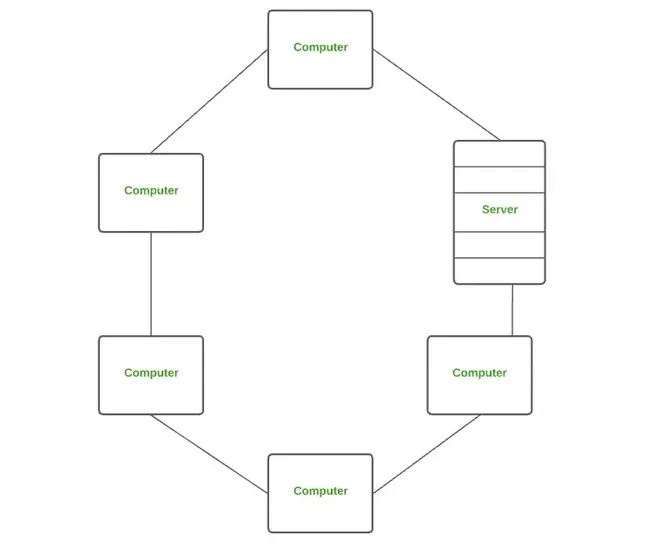 Local Area Network
 3. Campus Area Network (CAN)
CAN is bigger than a LAN but smaller than a MAN. This is a type of computer network that is usually used in places like a school or colleges. This network covers a limited geographical area that is, it spreads across several buildings within the campus. CAN mainly use Ethernet technology with a range of few kilometers. Its transmission speed is very high with a moderate maintenance cost and moderate cost.
Examples of CAN are networks that cover schools, colleges, buildings, etc.
 Campus Area Network
4. Metropolitan Area Network (MAN)
A MAN is larger than a LAN but smaller than a WAN. This is the type of computer network that connects computers over a geographical distance through a shared communication path over a city, town, or metropolitan area. This network mainly uses FDDI, CDDI, and ATM as the technology with a range from 5km to 50km. Its transmission speed is average. It is difficult to maintain and it comes with a high cost.
Examples of MAN are networking in towns, cities, a single large city, a large area within multiple buildings, etc.
 Metropolitan Area Network (MAN)
5. Wide Area Network (WAN)
WAN is a type of computer network that connects computers over a large geographical distance through a shared communication path. It is not restrained to a single location but extends over many locations. WAN can also be defined as a group of local area networks that communicate with each other with a range above 50km. Here we use Leased-Line & Dial-up technology. Its transmission speed is very low and it comes with very high maintenance and very high cost.
Examples of WAN are the Internet (largest WAN), Banking networks linking global branches
 Wide Area Network
Classification Based on Transmission Technology
1. Wireless Local Area Network (WLAN) :
WLAN is a type of computer network that acts as a local area network but makes use of wireless network technology like Wi-Fi. This network doesn't allow devices to communicate over physical cables like in LAN but allows devices to communicate wirelessly.
Most common example of WLAN is Wi-Fi.
 WLAN
WLAN2. System Area Network (SAN)
A System Area Network is designed to connect high-performance computers within a localized, high-speed environment, such as in data centers or supercomputing facilities. A SAN provides access to block-level data storage.
Examples of SAN are a network of disks accessed by a network of servers.
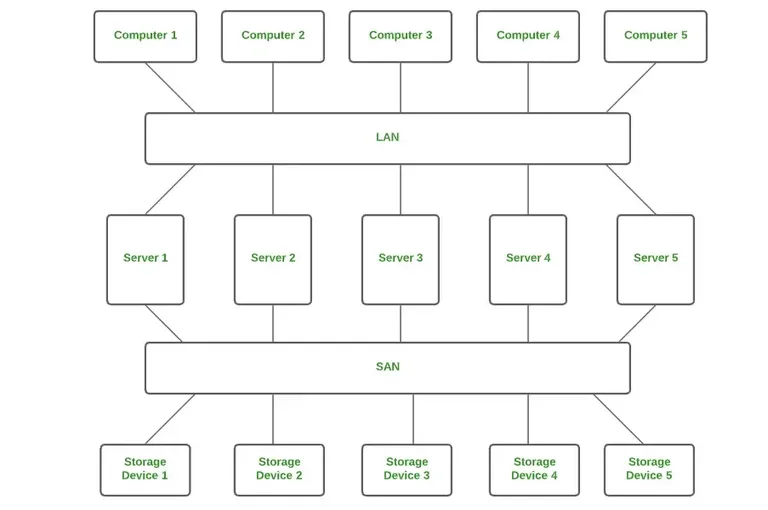 SAN
SAN3. Passive Optical Local Area Network (POLAN)
A POLAN is a type of computer network that is an alternative to a LAN. POLAN uses optical splitters to split an optical signal from a single strand of single-mode optical fiber to multiple signals to distribute users and devices. In short, POLAN is a point to multipoint LAN architecture.
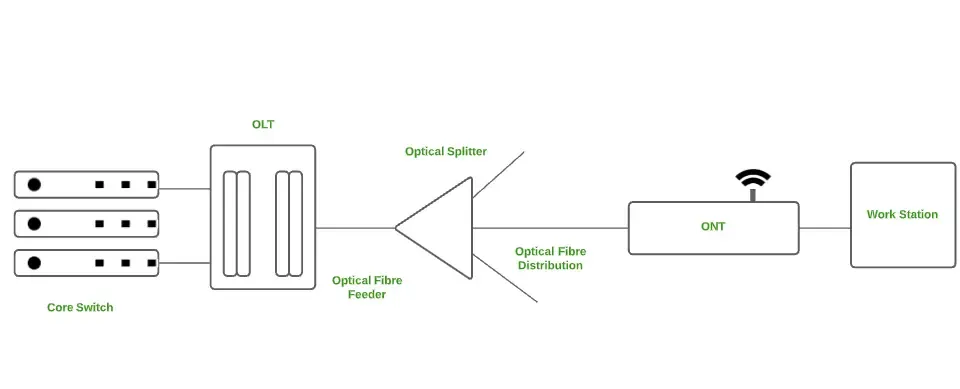 Passive Optical Local Area Network
Classification Based on Ownership and Access Control
We can classify networks into three main types based on ownership and how access is controlled: Private, Public, and Hybrid networks.
1. Private Network
These are networks completely owned and managed by a single organization or individual. The owner controls who can connect, what they can do, and how data moves within the network. Since there is no outside access, they are highly secure and reliable, often protected by firewalls and strict policies.
Examples:
- A company’s internal office network (Intranet)
- School or college campus networks
- Hospital systems storing patient data
2. Public Network
These are networks open to the general public and are usually provided by Internet Service Providers (ISPs) or businesses in public places. They offer basic or no authentication, making them less secure and vulnerable to attacks if not used carefully. Examples: Public Wi-Fi at cafes or airports, free hotspots in city centers, Internet (the largest public network).
3. Hybrid Network
A hybrid network blends private and public access, offering flexibility and role-based access control. Some parts are restricted (like internal systems), while others are open (like guest Wi-Fi). This setup is useful in environments where different users need different access levels. Example: A university network with private access for staff and students and limited access for guests.
Internetwork
An internetwork is a setup where two or more networks (like LANs or WANs) are interconnected using routers or gateways, allowing communication between them. This process is called internetworking.
There are two main types:

1. Intranet
An intranet is a private network used within an organization. It allows employees to access internal tools, documents, and systems securely. It's not available to the public, and typically uses private IP addresses. Examples: Company HR portals, Internal knowledge bases, Staff-only communication tools.
An extranet is an extension of the intranet that provides limited, secure access to outsiders such as partners, vendors, or clients. It's used to collaborate across organizations while maintaining internal security. Examples: Supplier portals, Client dashboards for project updates, Partner login systems for shared services
Types of Networks in Computer Network
Explore
Computer Network Basics
Physical Layer
Data Link Layer
Network Layer
Transport Layer
Session Layer & Presentation Layer
Application Layer
Advanced Topics
Practice