







Support learners to write about concentration of solutions and titration with confidence using these scaffolded writing prompts
Structure strips can be used to promote independent writing. In this resource learners write about masses and gas volumes using key words, describe methods for measuring gas volumes and determine theoretical and percentage yields.
-

Download this
Use the editable structure strips to support learners to find or retrieve information and write independently about the concentration of solutions and titrations.
View and download more Structure strips
Learning objectives
- Use key terms (solvent, solute, concentrated, dilute) correctly when describing solutions.
- Recall the names of the key pieces of apparatus used in a titration.
- Explain why particular pieces of apparatus and indicators are used in titration.
- Sequence steps logically to describe how to obtain accurate results when writing about titration.
Introduction
Many chemical reactions take place in solution. Ions and molecules in a solution can move freely, collide and therefore react. When reacting substances together, we need to know how much of each substance we have, to make sure that the reaction works efficiently. By knowing the concentration of a solution, we know how much of each reactant is being used.
Titration is an accurate method for finding out the concentration of an unknown solution, by comparing it against a solution of known concentration. One use of this technique is when titrating an acid against an alkali.
Successful answers to the first two sections of the structure strip will use the key terms in LO1. The remainder of the structure strip makes sure that learners focus on the aspects of the method that produce accurate, repeatable results in a titration and can explain their understanding of why a titration is carried out in this way (LO2, LO3). The sixth section encourages learners to relate what they see (macroscopic representation) to what is going on at the ionic level (sub-microscopic representation) (LO3). To explore the relationship between macroscopic and sub-microscopic understanding further visit our Johnstone’s triangle collection.
The extended answer question is aimed at LO4, asking learners to plan a method but focussing on the steps that can be taken to get results which are as reproducible as possible.
How to use structure strips
Structure strips are a type of scaffolding you can use to support learners to retrieve information independently. Use them to take an overview at the start of the topic, to activate prior knowledge, or to summarise learning at the end of a teaching topic. For more ideas on how to use structure strips with your learners, see 5 ways to use structure strips effectively.
Structure strips have sections containing prompts, sized to suggest the amount that learners must write. Learners glue the strips into the margin of an exercise book and write their answers next to the sections, in full sentences. When learners have finished using the structure strip, they should have an A4 page set of notes and examples.
The strips are printed five to a page and will need to be trimmed to size. Find them on the second page of the student sheet.
Scaffolding
- Encourage learners to use the suggested key words and phrases in their answers.
- To further support learners, include additional prompts in the structure strip. If learners are struggling to engage with the task, supply them with sentence starters created from the model answers.
- As learners grow in confidence, ask them to attempt the extension question first and then use the structure strip to improve or self-assess their answer.
Key words
Lattice, solvent, solute, solution, concentrated, dilute, g/dm3 (and/or mol/dm3), burette, pipette, accurate, indicator, neutralised, titre, concordant, reactant.
Metacognition
This resource supports learners to develop their metacognitive skills in three key areas.
- Planning: the strips provide scaffolding to plan the written response. Learners will decide where to gather information from (textbooks, own notes, revision websites). Ask learners: is the source of information you are using reliable?
- Monitoring: learners are prompted by the questions in the structure strip and can check their own answer against the prompts. Ask learners: have you covered all of the prompts in the space provided? Do you need to change anything to complete the task?
- Evaluation: learners can self-assess or ask a peer to check their work against the answers. Ask learners: did you achieve what you meant to achieve? What might you do differently another time?
Extended answer question
Instruct learners to answer the question after they have attempted the structure strip. The structure strip activates the required knowledge, which learners can then apply to the question.
Consider re-framing the context of this question to one that your learners are more familiar with, to empower them to unlock their existing science capital. Read more about science capital.
A learner has carried out a titration of a dilute hydrochloric acid solution using 1 mol/dm3 sodium hydroxide solution. They found an average titre of 24.6 cm3.
You are given a second dilute hydrochloric acid solution of unknown concentration.
Plan an experiment to find out whether the second sample of hydrochloric acid is more, or less concentrated than the first.
- Describe what you will do to obtain accurate results.
- Explain how you will use the results to determine whether the second solution is more, or less concentrated than the first.
You may use a labelled diagram to support your answer.
Answers
Suggested answers for the structure strip activity are given in the downloadable teacher notes.
Answer to extension question
Learners’ responses will vary, below is a description of the method used to obtain accurate results. Diagrams may include some of this information as labels.
Method
Fill a burette with the hydrochloric acid of unknown concentration and record an initial reading. Ensure that the reading of the burette is taken at eye level for an accurate reading.
Measure 25 cm3 of the 1 mol/dm3 sodium hydroxide solution using a pipette and transfer it to a conical flask. Add two or three drops of phenolphthalein indicator. Stand the flask on a white tile to make the colour easier to observe and place it under the burette.
Add the acid from the burette a little at a time to the alkali in the flask, swirling the contents of the flask well with each addition. Keep adding alkali until the pink colour just disappears. Record the final reading and calculate the titre added. This is a rough measurement.
Rinse out the conical flask and use the pipette to measure 25 cm3 of sodium hydroxide again and add more indicator. Quickly run a volume of acid 2 cm3 or 3 cm3 less than the rough titre into the flask and swirl well. Add the acid dropwise, swirling the flask all the time until the colour just changes. Record a new burette reading and calculate the accurate titre.
Repeat the accurate titration to collect two concordant results. Find an average of these.
Using the results to determine concentration
Compare the average of the results to the titre of 24.6 cm3 obtained from the first sample of hydrochloric acid (included in the question). If the titre for the unknown sample is greater than 24.6 cm3, then the unknown acid is less concentrated than the first solution. If it is less than 24.6 cm3, the new solution is more concentrated because less of the sample is required to neutralise the same volume of sodium hydroxide.
Downloads
Structure strip concentration of solutions and titration 14-16 student sheet
Handout | PDF, Size 0.17 mbStructure strip concentration of solutions and titration 14-16 teacher notes
Handout | PDF, Size 0.24 mbStructure strip concentration of solutions and titration 14-16 student sheet
Editable handout | Word, Size 0.43 mbStructure strip concentration of solutions and titration 14-16 teacher notes
Editable handout | Word, Size 0.44 mb
- Prepare(5)
 Ideas
Ideas5 ways to teach excess and limiting reagents to 14–16 learners
Tips for helping learners get to grips with this tricky part of quantitative chemistry
 News
NewsWhat is difficult about concentration?
Fresh insight offers tips for teaching the mathematics of moles, volume and molarity
 Ideas
Ideas5 ways to explain titration
From modelling to scaffolding, these tips will help students master this tricky topic
 Course
Quantitative chemistry | Self-led course
Build confidence in your quantitative chemistry knowledge and discover effective topic-specific teaching strategies
 CPD article
Moles and titrations
Dorothy Warren describes some of the difficulties with teaching this topic and shows how you can help your students to master aspects of quantitative chemistry
- Deliver(10)
currently reading
 Resource
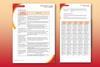
Concentration of solutions and titration | Structure strip | 14–16 years
Support learners to write about concentration of solutions and titration, using scaffolded writing prompts
 Lesson plan
Measuring vitamin C in fruit using a microscale titration | 14–16 years
Compare the amount of vitamin C in fruit and juices using a microscale titration in this practical lesson plan with follow-up questions
 Resource
Concentration of acids | Johnstone’s triangle worksheets | 14–16 years
Learners connect their understanding of dissolved ions, concentration and how chemicals are labelled with this single-page worksheet
 Resource
Determining unknown concentration | Johnstone’s triangle worksheets | 14–16 years
Guide learners to connect their thinking about calculating unknown concentrations following a titration
 Resource
Concentration and moles | Developing understanding | 14–16 years
Support learners to develop secure mental models of how concentration is measured and calculated in mol/dm3
 Resource
Concentration and mass | Developing understanding | 14–16 years
Encourage learners to deepen their understanding of concentration and mass from the macroscopic to sub-microscopic level
 Resource
Concentration of sodium hydroxide | Johnstone’s triangle worksheets | 14–16 years
Think about sodium hydroxide (NaOH) solution at a macroscopic, sub-microscopic and symbolic level
 Class experiment
A microscale acid–base titration
Use microscale titration to complete an acid–base neutralisation with sodium hydroxide in this class practical. Includes kit list and safety instructions.
 Practical video
Simple titration – practical videos | 14–16 students
Video resources showing how to carry out a titration experiment and interactive resources to allow students to collect their own results.
 Class experiment
Using indigestion tablets to neutralise an acid | 14-18 years
Investigate and measure the neutralising effect of indigestion tablets (antacids) on hydrochloric acid in this class practical. Includes kit list and safety instructions.
- Literacy(1)
 Resource
Quantitative chemistry | Key terms support | 14–16
Language support pack for quantitative chemistry, with key terms list, accessible glossary, Frayer models and unscrambling definitions
- Assess(4)
 Resource
Concentration of solutions and titration | In context | 14–16
Put concentration of solutions and titration into context with questions based on acids in fruit juices
 Resource
Concentration of solutions and titration | Knowledge check | 14–16
Assess learning of concentration of solutions and titration with a higher and foundation worksheet
 Resource
Quantitative chemistry | Review my learning | 14–16 years
A set of differentiated worksheets with answers to identify learning gaps and misconceptions on the topic of quantitative chemistry
 Quiz
QuizAmounts in solution and titrations | Bridging the knowledge gap | 14–16 years
Support your students with the transition to post-16 study with this quiz on amounts in solution and titrations
- Enrich(5)
 Lesson plan
Calculating and comparing solution concentrations | 16–18 years
Use this lesson plan to practise calculating the concentration of a solution from the mass of solute and volume of water
 Job profile
Scientist, food and pharmaceuticals
Taryn uses scientific instruments to test our food and medicines and make sure they are safe
 Class experiment
Acid–alkali conductometric titration worksheet | 14–16 years
Develop your learners’ understanding of ions and the changes in ionic concentrations in an acid-alkali neutralisation
 Job profile
Bioanalytical scientist
Claire’s work involves stress testing new medicines in various stages of drug development to ensure they are robust and reliable before being released onto the consumer market
 Resource
Titration screen experiment
Give students the opportunity to conduct their own titration experiment on a computer or tablet. This resource also includes a redox titration experiment.
No comments yet