








Use the context of common practical experiments to practise applying understanding of amounts measured in moles
Scientists can use analytical techniques such as combustion analysis to determine the empirical formula of a compound. Finding the empirical formula of a compound is important because, in combination with other information such as the compound’s molar mass, it allows scientists to determine the actual molecular formula of a compound and make predictions about its properties.
-

Download this
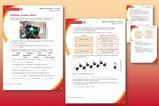
A higher level worksheet to put learning about amount of substance in moles into context. Answers are included in the teacher notes.
View and download more In context worksheets
About this resource
These In context worksheets ask learners to use their knowledge of amount of substance measured in moles in the context of common practical experiments, building their confidence and capability to face exam questions. With a mixture of short and long-answer questions covering:
- empirical formula
- molecular formula
- molar mass
- mole calculations
Learners will practise mathematical skills to build their confidence. For this topic a higher level worksheet is available. It is provided in a fully-editable format, giving you the flexibility to select the questions most relevant to a particular lesson or group of learners. Teacher notes include full worked answers to all questions which can be used for learners to peer or self-assess their work.
Downloads
Amount in moles in context student assessment (higher)
Handout | PDF, Size 0.25 mbAmount in moles in context student assessment (higher)
Editable handout | Word, Size 0.5 mbAmount in moles in context teacher notes
Handout | PDF, Size 0.22 mbAmount in moles in context teacher notes
Editable handout | Word, Size 0.43 mb
- Prepare(7)
 Ideas
IdeasWays to teach the mole at 14–16
Use these four ideas to effectively teach and contextualise this crucial chemistry unit
 Resource
Students’ difficulties with stoichiometry | Beyond appearances
Go beyond apperances and clarify the difficulties that students have around “the mole concept”.
 Ideas
IdeasStoichiometry and moles: how to explain it?
Use cooking as a fun, accessible introduction to why and how we use balanced equations


 Course
Quantitative chemistry | Self-led course
Build confidence in your quantitative chemistry knowledge and discover effective topic-specific teaching strategies

- Deliver(5)
 Resource
Amount of substance in moles | Structure strip | 14–16 years
Use scaffolded prompts to support learners to write about amount of substance in moles
 Resource
Moles of xenon | Johnstone’s triangle worksheets | 14–16 years
Introduce Johnstone’s triangle as a method of calculating the number of moles of xenon from a given volume of gas
 Resource
Moles and volume | Developing understanding | 14–16 years
Deepen your learners’ understanding of the idea that equal volumes of gases contain an equal number of molecules with this worksheet
 Resource
Moles of gold | Johnstone’s triangle worksheets | 14–16 years
Connect macroscopic, sub-microscopic and symbolic understanding of calculations involving moles and mass with Johnstone’s triangle
 Resource
Moles and mass | Developing understanding | 14–16 years
Develop understanding of the relationship between the mass of one mole, the number of moles and the mass of a substance
- Literacy(1)
 Resource
Quantitative chemistry | Key terms support | 14–16
Language support pack for quantitative chemistry, with key terms list, accessible glossary, Frayer models and unscrambling definitions
- Assess(3)
 Resource
Amount of substance in moles | Knowledge check | 14–16
Assess learning of amount of substance measured in moles with this higher level worksheet
currently reading
 Resource
Amount of substance in moles | In context | 14–16
Put amount of substance measured in moles into context with questions based on common practical experiments
 Resource
Quantitative chemistry | Review my learning | 14–16 years
A set of differentiated worksheets with answers to identify learning gaps and misconceptions on the topic of quantitative chemistry
- Enrich(2)
 Games and puzzles
Moles equations | Gridlocks puzzle | 14–16 years
Reinforce your students’ understanding of moles equations using these sudoku-style puzzles, with printable worksheets and answers
 CPD article
How to teach moles at post-16
Use this explainer to help students overcome misconceptions of this fundamental quantity



No comments yet