







Use scaffolded prompts to support learners to apply their understanding of balancing chemical equations
Structure strips can be used to promote independent writing. Learners write about balanced symbol equations using key words. They will describe the law of the conservation of mass, explain the importance state symbols, balance equations and identify excess and limiting reactants.
-

Download this
Stick these structure strips into the margin of a page to support learners to find or retrieve information and write independently about balanced equations. The resource includes editable writing prompts, an extension question and example answers.
View and download more Structure strips
Learning objectives
- Explain why chemical equations need to be balanced.
- Construct and interpret balanced symbol equations.
- Show how the symbolic representation of a reaction links to observations made in the laboratory.
- Integrate equations into written discussions and explanations.
Introduction
When we write about chemistry, we often use a type of ‘shorthand’ in the form of formulas and equations. While word equations can be used, symbol equations can give us more useful information about the reaction, particularly when the name of a substance doesn’t make it obvious which elements it is made of (for example, methane is CH4).
It is essential to balance symbol equations to ensure that they obey the law of conservation of mass. When we have an accurately constructed equation, it can help us make predictions about what we should observe and how much of each reactant we need for reactions to be efficient. Constructing and interpreting balanced chemical equations is a key skill which underpins all learning in chemistry.
Balanced symbol equations are a key example of the symbolic representation in Johnstone’s triangle. Our Johnstone’s triangle worksheets give learners the opportunity to reflect on how the symbolic representation relates to their observations of a chemical reaction (the macroscopic level). Read more about how to use Johnstone’s triangle in your teaching.
Expert chemists move seamlessly between these two interpretations (symbolic and macroscopic). However, learners need to be taught how to include and refer to the symbolic representation when explaining observations and to use the symbolic representation as a tool to make predictions.
The first three sections of this structure strip check learners’ understanding of the basic construction of symbol equations (learning objectives 1 and 2). The remainder of the exercise guides them to write about the links between equations and what they observe.
How to use structure strips
Structure strips are a type of scaffolding you can use to support learners to retrieve information independently. Use them to take an overview at the start of the topic, to activate prior knowledge, or to summarise learning at the end of a teaching topic. For more ideas on how to use structure strips with your learners, see 5 ways to use structure strips effectively.
Structure strips have sections containing prompts, sized to suggest the amount that learners must write. Learners glue the strips into the margin of an exercise book and write their answers next to the sections, in full sentences. When learners have finished using the structure strip, they should have an A4 page set of notes and examples.
The strips are printed five to a page and will need to be trimmed to size. Find them on the second page of the student sheet.
Scaffolding
- Encourage learners to use the suggested key words and phrases in their answers.
- To further support learners, include additional prompts in the structure strip. If learners are struggling to engage with the task, supply them with sentence starters created from the model answers.
- As learners grow in confidence, ask them to attempt the extended answer question first and then use the structure strip to improve or self-assess their answer.
Key words
Ratio, mass, atom, molecule, aqueous, limiting, excess, incomplete combustion, complete combustion, reactant, product.
Metacognition
This resource supports learners to develop their metacognitive skills in three key areas.
- Planning: the strips provide scaffolding to plan the written response. Learners will decide where to gather information from (textbooks, own notes, revision websites). Ask learners: is the source of information you are using reliable?
- Monitoring: learners are prompted by the questions in the structure strip and can check their own answer against the prompts. Ask learners: have you covered all of the prompts in the space provided? Do you need to change anything to complete the task?
- Evaluation: learners can self-assess or ask a peer to check their work against the answers. Ask learners: did you achieve what you meant to achieve? What might you do differently another time?
Extended answer question
Instruct learners to answer the question after they have attempted the structure strip. The structure strip activates the required knowledge, which learners can then apply to the question.
Consider re-framing the context of this question to one that your learners are more familiar with, to empower them to unlock their existing science capital. Read more about science capital.
In the reaction between hydrochloric acid (HCl) and magnesium metal (Mg), the products are soluble magnesium chloride (MgCl2) and hydrogen gas (H2). Construct a balanced symbol equation for the reaction, including state symbols. Compare the observations you would make during the reaction when the magnesium is in excess and when it is the limiting reactant. Refer to your equation in your answer.
Answers
Suggested answers for the structure strip activity are given in the downloadable teacher notes.
Answer to extended answer question
2HCl(aq) + Mg(s) → MgCl2(aq) + H2(g)
During the reaction, we can see from the equation that hydrogen gas is produced, so we will observe fizzing. In addition, the solid magnesium turns into aqueous magnesium chloride, so the piece of magnesium will get smaller. These observations will be the same whether the magnesium is in excess or limiting.
When the magnesium is in excess, the acid will be used up first, so the fizzing will stop and a small piece of solid magnesium will be present. Whereas, if the magnesium is the limiting reactant, it will completely disappear and at the end there will be a clear, colourless solution.
We can test pH of the solution when the reaction finishes. If the magnesium is the limiting reactant, there will still be acid present so the solution will turn universal indicator red or orange. However, if the magnesium is in excess, all the acid should be used up, so the solution will turn universal indicator green.
Downloads
Structure strip balanced chemical equations 14-16 teacher notes
Editable handout | Word, Size 0.44 mbStructure strip balanced chemical equations 14-16 student sheet
Editable handout | Word, Size 0.43 mbStructure strip balanced chemical equations 14-16 teacher notes
Handout | PDF, Size 0.23 mbStructure strip balanced chemical equations 14-16 student sheet
Handout | PDF, Size 0.19 mb
- Prepare(3)
 CPD article
Teaching conservation of mass at 14–16
Help learners master the concept of conservation of mass with these hands-on teaching ideas
 Ideas
Ideas5 effective ways to teach balancing equations
Tried-and-tested approaches to build student skills and confidence
 Course
Quantitative chemistry | Self-led course
Build confidence in your quantitative chemistry knowledge and discover effective topic-specific teaching strategies
- Deliver(7)
 Poster
How to balance chemical equations
Simple steps to success, confidence and fluency with balancing equations for 14–16 learners
currently reading
 Resource
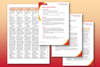
Balanced chemical equations | Structure strip | 14–16 years
Use scaffolded prompts to support learners to write about balanced chemical equations
 Resource
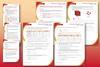
Interpreting chemical equations for ionic compounds | Developing understanding | 14–16
Help your learners develop mental models of what is represented in balanced chemical equation for ionic compounds with this resource, including teacher notes and a student worksheet
 Resource
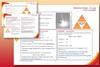
Balancing chemical equations using magnesium and oxygen | Johnstone’s triangle worksheets | 14–16 years
Introduce Johnstone’s triangle with these teacher notes and a student worksheet to help learners gain a deeper understanding of balancing chemical equations
 Resource
Interpreting chemical equations | Developing understanding | 14–16 years
Deepen learners’ understanding of interpreting chemical equations by exploring the topic at different conceptual levels
 Resource
Balancing chemical equations using hydrogen and oxygen | Johnstone’s triangle worksheets | 14–16 years
Introduce Johnstone’s triangle to help learners gain a deeper understanding of balancing chemical equations
 Class experiment
The change in mass when magnesium burns
A class practical to find the formula of magnesium oxide using the change in mass when magnesium burns
- Literacy(1)
 Resource
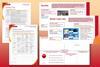
Quantitative chemistry | Key terms support | 14–16
Language support pack for quantitative chemistry, with key terms list, accessible glossary, Frayer models and unscrambling definitions
- Assess(4)
 Resource
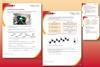
Balanced chemical equations and fuel | In context | 14–16
Put balancing chemical equations into context with questions based on fuels
 Resource
Balanced chemical equations | Knowledge check | 14–16
Ready-to-use worksheets to assess learning of balancing chemical equations, foundation and higher level
 Resource
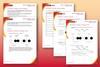
Quantitative chemistry | Review my learning | 14–16 years
A set of differentiated worksheets with answers to identify learning gaps and misconceptions on the topic of quantitative chemistry
 Quiz
QuizSymbols, formulas and balanced equations | Bridging the knowledge gap | 14–16 years
Support your students with the transition to post-16 study with this quiz on symbols, formulas and balanced equations
- Enrich(2)
 Class experiment
Finding the formula of copper(II) oxide
Use this demonstration with your 14–16 learners to deduce the formula of copper(II) oxide by reducing it with methane
 News
NewsMaking ammonia production greener
Could lasers offer a more sustainable alternative to the Haber process

No comments yet